
A 60-Minute Goalkeeper Session Built Around Match Decisions
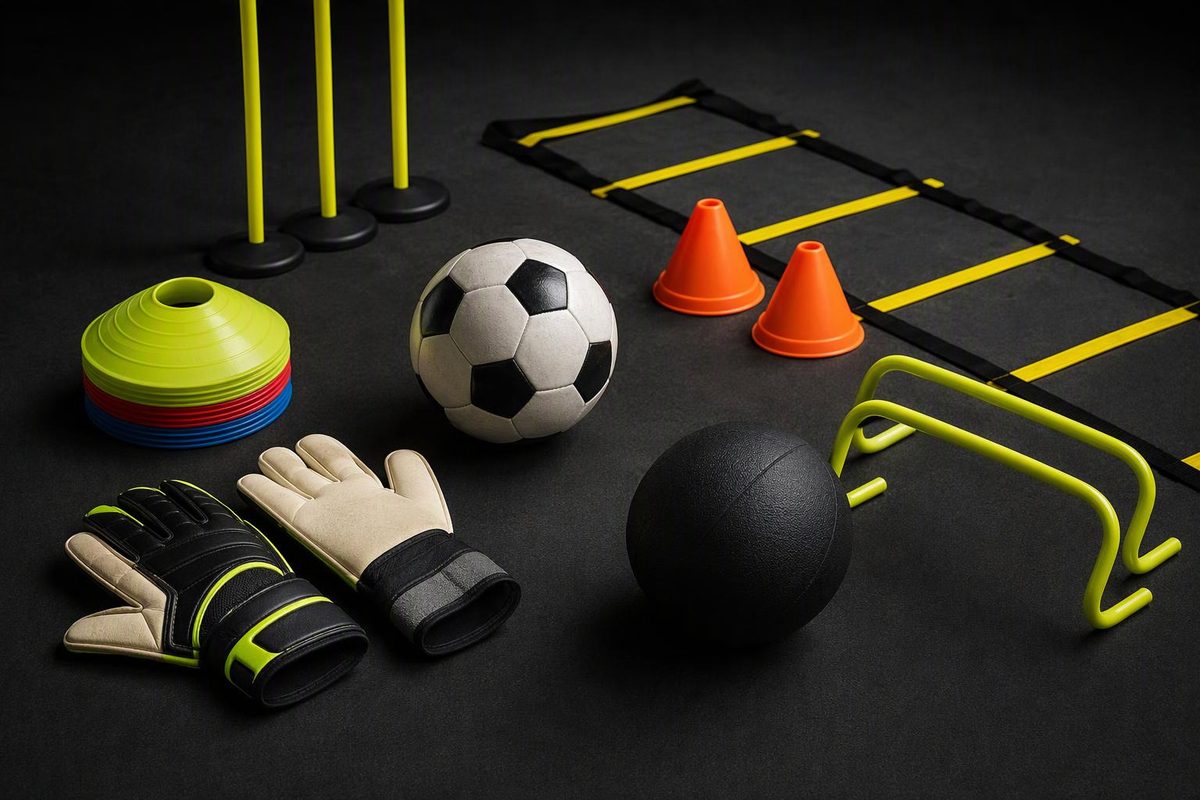
Build a 60-minute goalkeeper practice for diving, shot-stopping, 1v1 or cross decisions, distribution, and realistic game actions.
The central soccer goalkeeper training decision is simple: use predictable service briefly to improve technique, then add opponents, choices and consequences. A goalkeeper who always knows where the next shot is going can rehearse a movement, but not the perception and decision that must trigger it in a match.
Interviews with 15 expert goalkeeper coaches identified decision-making as essential across goal defending, space defending and attacking contribution. Some coaches nevertheless reported spending as much as 70% of training on technical drills. The researchers’ practical recommendation was to balance technical work with unpredictable, representative situations (FIFA Training Centre).
Choose the match problem you need to train; the planner switches the 12-minute decision block.
Vary whether the goalkeeper should sweep, close the angle or hold.
| Time | Block | Primary Decision |
|---|---|---|
| 0–8 | Movement and handling | Prepare progressively |
| 8–18 | Low diving | Known direction; refine technique |
| 18–30 | Variable shots | Read, set and choose the save |
| 30–42 | Through-balls and 1v1s | Sweep, close or hold |
| 42–52 | Pressured distribution | Select the best available pass |
| 52–60 | Integrated game | Connect saves, support and attack |
Source note: session timings and task constraints come from the coaching plan; decision principles follow the cited FIFA goalkeeper guidance.
The 60-Minute Goalkeeper Session
| Time | Block | Main Outcome |
|---|---|---|
| 0–8 min | Movement, ball work and handling | Prepare to move, receive and save |
| 8–18 min | Low-diving technique | Improve push-off, handling and both sides |
| 18–30 min | Variable shot-stopping | Position, set and respond to the shooter |
| 30–42 min | 1v1s or crosses | Train one match theme in depth |
| 42–52 min | Distribution under pressure | Improve support angles, first touch and pass selection |
| 52–60 min | Integrated game | Connect goalkeeper actions to team play |
Use one full-size goal, 8–12 balls, cones and two target gates or mini-goals. The first four blocks can run with one goalkeeper and two servers or attackers. Distribution needs three outfield players; the final game works best when the practice joins the squad.
0–8 Minutes: Build Movement, Footwork And Handling
Begin with the goalkeeper moving through the central six to eight metres of the goal area while exchanging passes with a server.
- Spend two minutes on easy jogging, lateral movement, hip mobility and controlled changes of direction.
- Use two minutes of two-touch passing with both feet. Move into a new supporting angle after every pass.
- Complete two minutes of catches between waist and head height.
- Finish with two minutes of low scoops and controlled collapse saves, alternating sides.
Increase movement speed and service gradually. The goalkeeper should be warm before facing forceful shots or repeatedly contacting the ground. A longer squad preparation can use this dynamic soccer warm-up before the goalkeeper-specific work.
8–18 Minutes: Rehearse Low-Diving Technique
Set the goalkeeper centrally, with the server six to eight metres away. Complete two rounds of three low balls to the right and three to the left, followed by 30–45 seconds of recovery and feedback.
Start with a rolled ball, then progress to a firmly passed ball. The direction is known during this block because the objective is movement quality rather than anticipation.
Coach the goalkeeper to begin balanced, with the knees slightly flexed and the hands ready. The body should travel down toward the ball rather than fall backward. Push through the foot on the diving side and attack the ball with open hands. When the ball can be held, secure it with one hand behind and the other on top.
These cues align with FIFA’s technical progressions for learning to dive and low diving.
Watch both sides separately rather than assuming they are equivalent. In an on-field study of 19 competitive academy goalkeepers, dives to the non-preferred side showed different trunk and hip movement patterns and less explosiveness than preferred-side dives. That finding does not establish one ideal technique, but it supports checking for meaningful side-to-side differences (Spratford et al., 2022).
18–30 Minutes: Make Shot-Stopping Variable
Place two attackers or servers 12–16 metres from goal, one slightly left and one slightly right. A feeder passes to either player, who may shoot first time or take one touch. Do not tell the goalkeeper which player will receive.
Run two sets of four to six attacks with 60–90 seconds between sets. Leave enough time between repetitions for the goalkeeper to recover, reset and produce a high-quality action.
Coach the sequence:
- Move with the pass. Adjust the angle using short steps.
- Read the receiver. The touch, approach and body orientation provide useful information.
- Set for the shot. Avoid being airborne or locked upright as the ball is struck.
- Choose an action. Catch, parry, block or hold position according to the ball rather than a pre-planned instruction.
- Finish the play. Recover for a rebound or distribute after a secure catch.
Vary shot location and timing, but keep the service accurate enough to create genuine saves. Randomly blasting balls from close range mostly creates survival responses rather than useful shot-reading practice.
30–42 Minutes: Choose 1v1s Or Crosses
Do not squeeze every goalkeeper skill into every practice. Select the option that reflects the team’s current objective or a recurring match problem.
Option A: Train Through-Ball And 1v1 Decisions
Start an attacker 18–22 metres from goal and place a feeder to one side. The feeder varies the through-ball so that some are reachable by the goalkeeper, some clearly favour the attacker and some remain uncertain enough to force a decision.
The goalkeeper must decide whether to sweep, close the angle or hold. Add a recovering defender once the basic task works so the goalkeeper and defender must communicate.
Coach the goalkeeper to accelerate when committing, stay upright while closing longer distances and lower the posture as the attacker gets close. A heavy touch can be a trigger to attack the ball.
FIFA’s 1v1 analysis stresses that the goalkeeper’s decision depends on the attacker’s distance and shooting preparation, and on whether a defender can intervene—not on an instruction to always rush out (FIFA Training Centre).
Option B: Make Crosses A Live Decision
Deliver from one wide area, initially without traffic. Mix balls the goalkeeper should claim with deliveries that should be punched or left. Then add one attacker and one defender.
The goalkeeper’s task is to scan the area, establish a starting position, judge the flight and call the decision. FIFA’s analysis of crosses from corners identifies those elements—plus first steps and physicality—as central to the task (FIFA Training Centre).
Avoid coaching the goalkeeper to come for every delivery. Staying can be the correct decision when a secure intervention is unlikely.
42–52 Minutes: Distribute Under Pressure
Create a build-out area using the goalkeeper and two players acting as centre-backs against one presser. Place a target gate near each touchline and one central target beyond the presser.
Play starts with the goalkeeper. The possession team scores by passing through a target gate; the presser scores by winning the ball and finishing into the main goal. After two minutes, let the presser start from different positions.
The goalkeeper should scan before receiving, move to provide a useful angle and use the first touch to create the next pass. Do not require short distribution regardless of pressure; reward the best available choice.
FIFA’s goalkeeper practice guidance similarly progresses passing work by adding a live presser and a transition to defending after possession is lost (FIFA Training Centre).
52–60 Minutes: Connect The Actions In A Game
Use a 4v4 or 5v5 game with the goalkeeper defending the full-size goal and the opposition defending two mini-goals. Restart every ball with the goalkeeper.
Award one point for a normal goal and one bonus point when an appropriate goalkeeper decision starts an attack that reaches a target. “Appropriate” matters: do not reward only short passes or only quick throws. The goalkeeper must also manage starting position, communication, through-balls and transitions after possession changes.
If too few players are available, use 2v2 plus the goalkeeper in a shorter, narrower area. It will create fewer tactical pictures, but it still connects distribution, support and transition defending.
Control Quality Rather Than Chasing A Dive Count
Research does not provide one universal number of dives for every goalkeeper or session. A two-season study covering 758 training and match records from six older academy goalkeepers found that jumps, dives and other external-load measures differed by age category and context. The study supports individual monitoring rather than applying one workload threshold to everyone (Martínez-Cabrera et al., 2024).
Record four measures after the session:
- secure catches out of total save attempts;
- appropriate decisions in the 1v1 or crossing block;
- completed distributions under pressure;
- left- and right-side diving exposures.
Also record the surface, session intensity and any pain. Fit the diving volume to the goalkeeper’s recent workload and recovery. Stop or reduce repetitions before movement and landing quality deteriorate.
Young or inexperienced goalkeepers should use shorter distances, slower service and less traffic on aerial balls. Pain, persistent soreness or return from injury requires assessment and progression from a qualified coach or physiotherapist.