
Twenty Minutes That Cut Injury Risk by a Third: What Warm-Up Research Actually Found
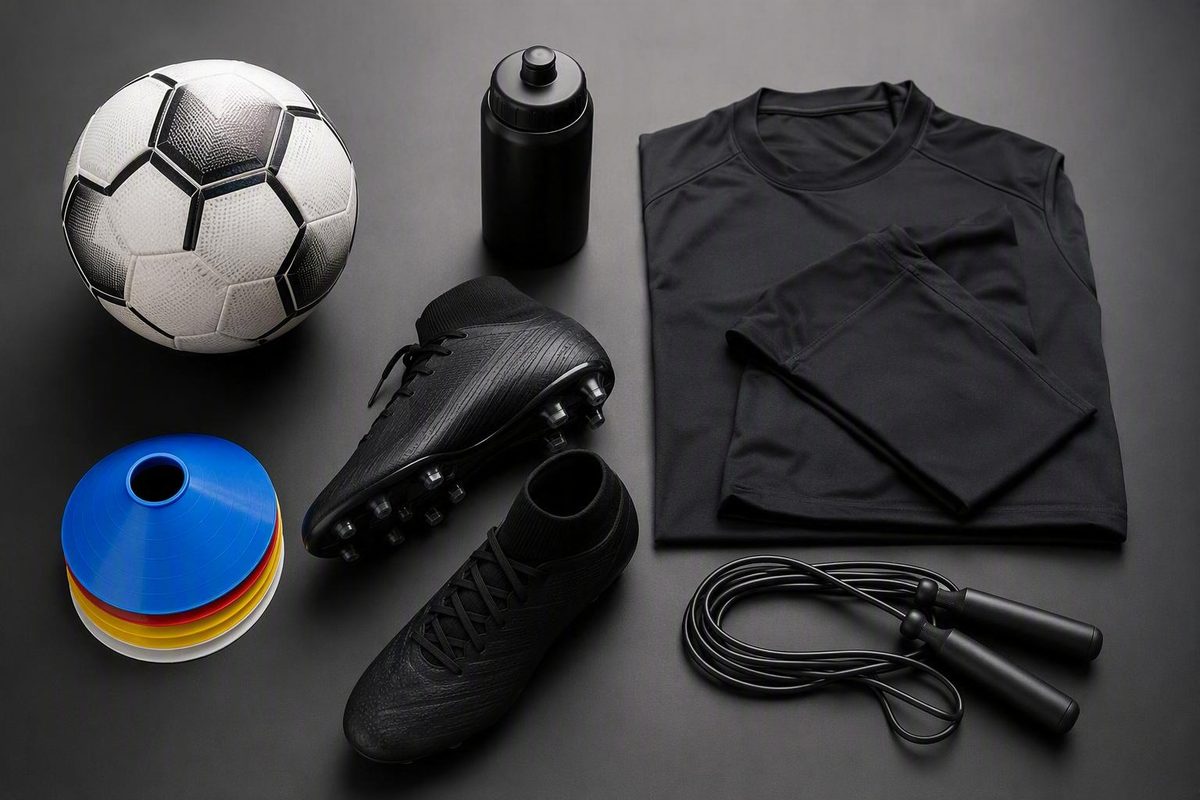
The evidence-backed soccer warm-up: what FIFA 11+ actually reduces injuries by, why static stretching lost its spot, and a 20-minute structure that holds up.
The warm-up is the most ritualized 20 minutes in soccer, and for decades most of the ritual was guesswork. The research has since sorted it: some components carry real, measured effects, and some survive purely by tradition.
The headline finding: structured programs work
The best-studied warm-up in sport is FIFA 11+, a standardized 20-minute program of running, strength, balance, and jumping exercises. Across randomized trials in youth and amateur soccer, teams that ran it at least twice a week saw overall injuries drop by roughly 30–40%, with larger effects on knee and ankle injuries. That is not a marginal gain — it is one of the largest reliable effects in sports medicine, achieved with cones and a ball.
What earns its minutes
- Progressive running. Gradually raising muscle temperature measurably improves sprint and jump performance; a warm muscle produces force faster.
- Dynamic movements. Leg swings, lunges, skips — moving through range at increasing speed prepares tissue for game demands without dampening power output.
- Strength and landing work. The Nordic hamstring curls and controlled landings inside 11+ are where most of the injury reduction is thought to live; hamstring and ACL injuries are exactly what they load against.
- Short accelerations at the end. The last minutes should look like the first minutes of the match.
What lost its spot
Long static stretching — hold-for-30-seconds toe touches — fell from grace for two reasons: it does not reduce injury rates in the sports where it was tested, and sustained holds temporarily reduce sprint and jump performance when done immediately before play. It isn’t harmful in any lasting sense; it simply belongs after training, not before kickoff.
A structure that holds up
A defensible 20 minutes: five minutes of progressive jogging with direction changes; five of dynamic mobility; five of strength, balance, and landing work; five of accelerating ball work ending at match intensity. Two constraints matter more than the exact menu — the intensity must rise steadily, and the program must actually happen twice a week, because the injury-reduction evidence is dose-dependent.
The warm-up is the cheapest training intervention with proven results in soccer. Twenty minutes, no equipment, a third fewer injuries — the science rarely hands out deals that good.