
Trapping in Soccer: Cushion the Ball, Then Make the Next Play
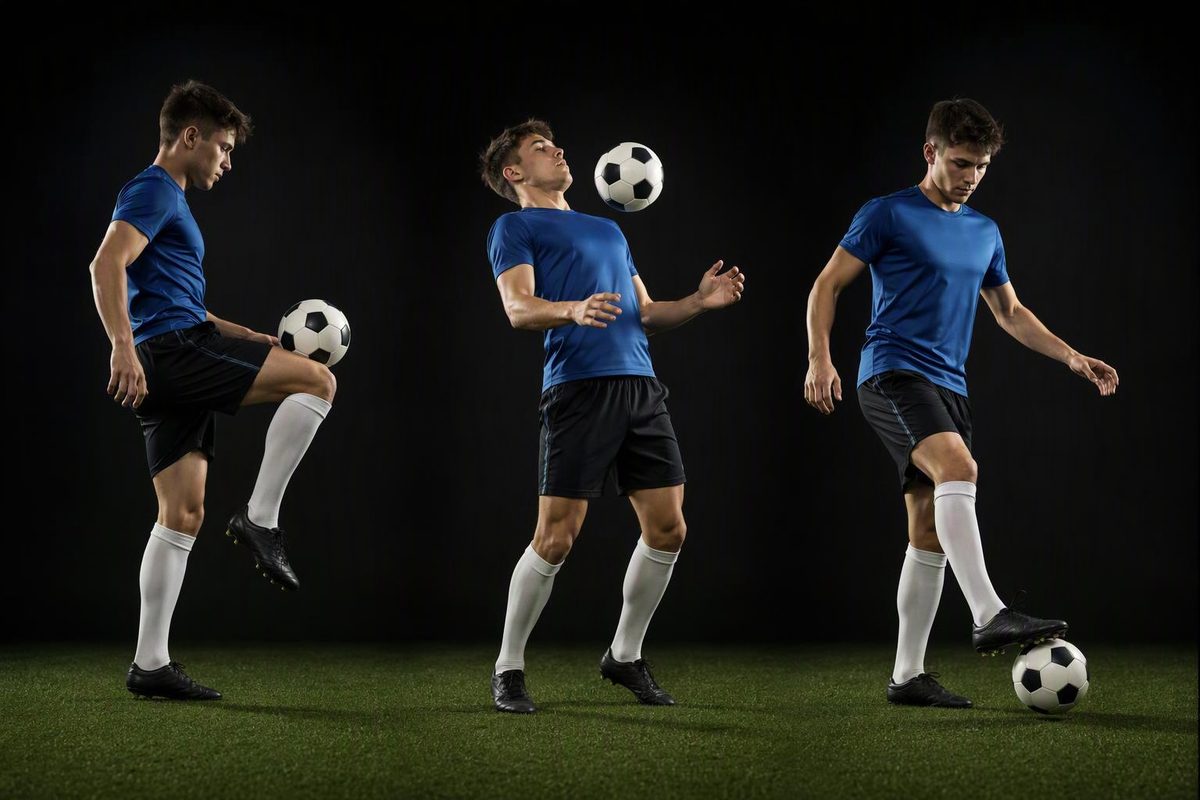
Learn foot, thigh and chest trapping in soccer, fix common control errors, and run an 18-minute progression from simple service to live pressure.
Practise taking pace off the ball, then doing something useful with it. Begin with manageable passes and gentle aerial service, but finish with an opponent: stopping the ball beautifully is not enough if the next touch loses possession.
Trapping in soccer means bringing an incoming ball under control, usually with the foot, thigh or chest. It can stop the ball, but it does not have to leave it motionless. The purpose is to prepare a pass, dribble or shot while keeping the ball away from opponents—the emphasis in the Special Olympics football coaching guide, which describes cushioning into available space.
This session focuses specifically on absorbing incoming pace and controlling different ball heights. For the broader decisions about scanning, turning and directing a reception, use our first-touch guide.
How to trap the ball
Use three cues: get into position, cushion the contact, prepare the next action. Track the ball’s path and move your feet early rather than reaching from an awkward position. As it arrives, let the receiving surface give slightly instead of making a stiff barrier. These principles apply across foot, thigh and chest control in the Special Olympics guide.
Foot traps
- Inside of the foot: Start here for ground passes. Turn the foot outward to present the inside surface, meet the ball and allow the receiving leg to move back slightly on contact. Aim for a ball you can play next without stretching or chasing.
- Sole: For a rolling ball, lift the receiving foot slightly, toes up, and gently stop the ball beneath the forefoot. Keep your weight supported by the standing leg rather than stepping onto the ball.
- Top of the foot: For a dropping ball, move into its flight path. Present the top of the foot, then lower it with the ball to soften the contact.
Treat these as starting cues, not a rigid model every reception must copy. The City of Loveland’s youth coaching manual recommends cushioning ground balls with the inside of the foot and flighted balls with the top of the foot, thigh or chest. For sole control, the Special Olympics guide also emphasizes supporting weight through the standing leg when stopping the ball underfoot.
Thigh and chest traps
Thigh: For a ball too high for comfortable foot control but below chest height, raise the thigh into its path, then lower it slightly at contact. Use the thigh rather than the knee, aiming to cushion the ball toward your feet instead of juggling it upward. Withdrawing the thigh on impact is the central cue in Mastersport’s thigh-control guidance.
Chest: Move into the flight path and present your chest to the ball. Keep your knees soft and avoid bracing into a rigid rebound surface. Let the torso give at contact, then move your feet to collect the dropping ball. Begin with gentle, accurate throws, not powerful kicks.
For either surface, judge the whole reception: where does the ball go, and can the player make the next play?
An 18-minute trapping practice
This is a proposed coaching progression, not a research-validated dose. Allow 18 minutes of practice plus changeovers, after a warm-up. The setup below suits six players; duplicate the working areas for 12. You need balls and cones, with clear space between groups.
For beginners, use slower service and more space. Start aerial work without defenders or heading; if a throw is too high or uncomfortable to receive, catch it and reset.
1. Ground-pass cushioning — 4 minutes
Work in pairs about 5 metres apart with one ball. Pass along the ground; the receiver cushions with the inside of the foot, then passes back. Change receiving feet regularly.
After two minutes, vary pass speed slightly and let the receiver take the ball left or right before returning it. Use occasional sole traps where appropriate, rather than requiring the same surface every time.
Coach: “Leave yourself a playable next touch.” If players are repeatedly chasing the ball, reduce service speed before adding complexity.
2. Gentle aerial service — 4 minutes
In the same pairs, use gentle throws from a comfortable distance. Agree the intended height before each serve: dropping toward the foot, toward the thigh, or toward the chest. Choose one or two surfaces to work on rather than rushing through all three. Swap server and receiver every minute.
The receiver cushions the ball, settles it and passes back along the ground. Poorly placed throws should be reset, not counted as trapping errors. Hand service to the foot, thigh and chest is also suggested in the Special Olympics BC soccer skills book.
Coach: “Let the surface give.” Allow a bounce for players struggling to judge a dropping ball.
3. Receive against a defender — 5 minutes
Use groups of three in an approximately 8 × 10-metre area. One player serves a ground pass, one receives and one defends. Put a 2-metre exit gate at each end.
Initially, the defender starts about 2 metres from the receiver and moves only after the first contact. The receiver controls, protects and dribbles through either gate. Rotate roles after each attempt.
Progress to the defender moving when the pass is struck. Adjust starting distance if every attempt is either effortless or immediately lost.
Coach: “Where is the pressure? Which space can you use?” Keep aerial service out of this first pressure progression.
4. Game check — 5 minutes
Play 3v3 on an approximately 20 × 15-metre pitch, scoring by dribbling across the opponent’s end line under control. Duplicate the pitch for 12 players.
Use normal play without compulsory stopping or a blanket two-touch rule. Watch whether players cushion difficult passes and direct easier ones into useful space. A good first-time pass should not be penalized just because trapping is the session theme.
Fix errors—and check whether learning lasts
| What you see | First adjustment to try |
|---|---|
| Ball rebounds too far | Slow the service and rehearse giving slightly at contact. |
| Player reaches and loses balance | Improve early foot movement into the ball’s path. |
| Aerial control pops upward when the aim is to bring it down | Reduce throw height and practise cushioning downward. |
| Clean trap, immediate turnover | Add defender position and the next action to the task. |
The case for this progression is broader than trapping alone. A 2021 systematic review of 35 soccer skill-acquisition studies found that repetition-based approaches improved technical outcomes, while methods encouraging exploration in game-like scenarios supported technical and tactical skills. The impact of repetition-based approaches on match play remained largely unexplored. The research involved players with previous soccer experience, was of moderate overall quality and varied substantially; it does not establish one best trapping drill or session length.
Use repetitions to solve the contact problem, then pressure to test whether the solution is useful. Sample 10 receptions for one player in the final game and record whether control enables the intended next action, requires a rescue touch, or loses possession. Repeat the observation next session under similar conditions, noting service quality and pressure. Check aerial cushioning separately with comparable gentle service: the ground-pass game cannot establish improvement in chest or thigh control. Better performance immediately after a drill is useful feedback—not, by itself, proof of lasting learning.