
How to Manage World Cup Returnees Without Guessing Injury Risk
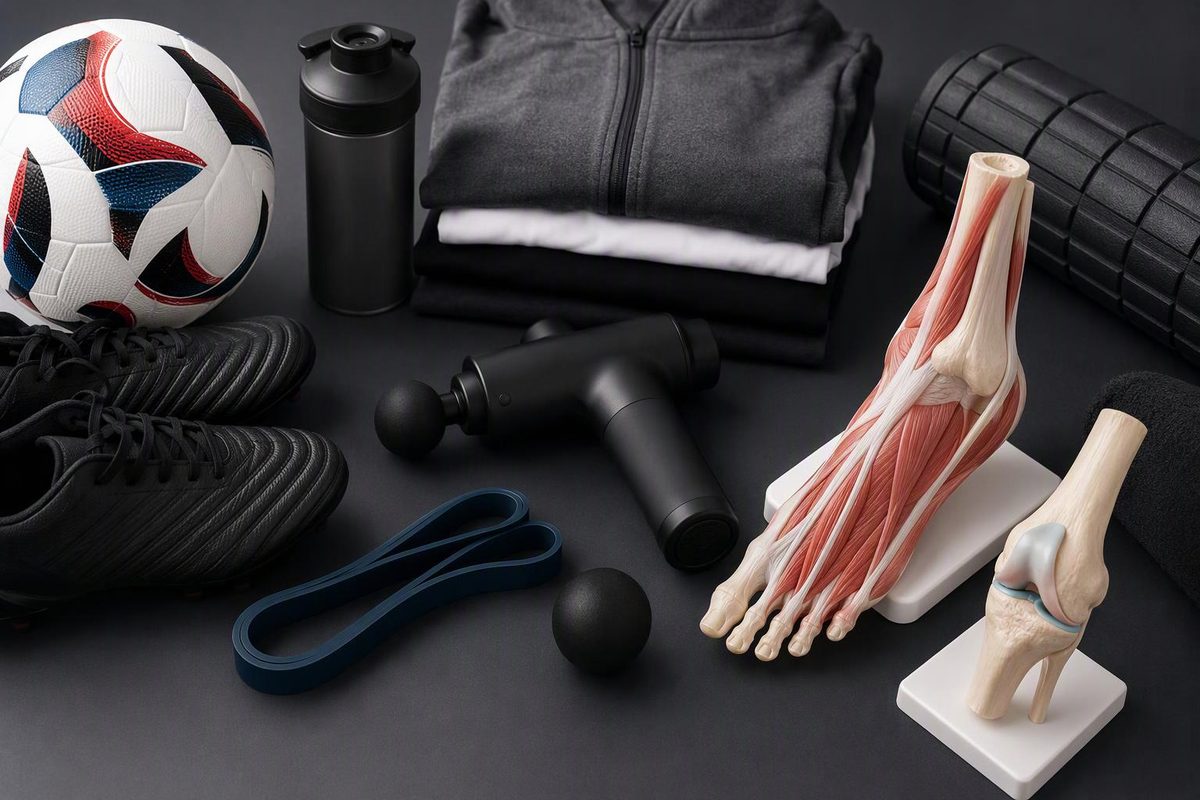
A practical framework for adjusting training after the 2026 World Cup using player exposure, recovery time, symptoms and the competitive schedule.
Do not give every World Cup returnee the same preseason. Start with the player’s match exposure, time off, injury history, current symptoms and upcoming schedule. Players returning late or carrying pain should not be dropped straight into the same volume as teammates who had a full break and preseason.
The evidence supports concern about short recovery and repeated matches. It does not let a coach predict that a particular player will be injured or prove that every injury after the 2026 World Cup was caused by the tournament.
Select the player’s current status, recovery and tournament exposure to identify the appropriate return lane.
Choose a Return Lane
This triage changes training decisions; it does not calculate injury probability.
Choose the three player-specific fields. Current clinical symptoms take priority over workload history.
Action: Do not assign a training lane yet.
Compare the three lanes
| Lane | Typical trigger | Training decision |
|---|---|---|
| Normal build | Limited exposure, adequate break, no symptoms | Join the planned progression and monitor response |
| Modified build | Heavy exposure, short break, persistent soreness or disrupted preparation | Keep tactical work while reducing avoidable and duplicate load |
| Medical/RTP | Pain, altered movement, neurological symptoms or unresolved injury | Arrange assessment and a clinician-led return |
Source note: Editorial triage informed by Page et al. (2023) and the 2025 FIFPRO workload safeguards. It is not a validated injury-prediction model.
Use medical assessment first when a player reports pain, altered movement, neurological symptoms or a recent unresolved injury. For players cleared to train, separating returnees into normal-build and modified-build lanes is more useful than applying one squad-wide “World Cup fatigue” label.
This is practical triage, not a validated injury-prediction model. Movement between lanes should follow the player’s response rather than a fixed number of days.
Short Recovery Raises Concern, Not Certainty
A 2023 systematic review defined fixture congestion as at least two matches with four or fewer recovery days. Five of its eight included studies found higher match-injury incidence during congested schedules, although injuries generally caused shorter absences in those periods. Findings for training and overall injury incidence were mixed (Page et al., 2023).
One major prospective study followed 27 elite teams over 11 seasons. In league matches, four or fewer recovery days rather than at least six were associated with a 32% higher muscle-injury rate; the total injury rate was 9% higher. The association was particularly evident for hamstring and quadriceps injuries (Bengtsson et al., 2013).
Those results concern repeated short turnarounds, not “World Cup burnout” as a single measurable condition. They describe group-level associations and cannot tell staff which individual will be injured next.
The 2026 club exposure figures show why some squads face a harder management problem. ESPN calculated 5,931 World Cup minutes for Bayern Munich’s players, 4,651 for Paris Saint-Germain and just under 5,000 for Manchester City. Arsenal and Barcelona were around 4,000 each. Its analysis also considered deep tournament runs, injuries, 2025 Club World Cup participation, changed European schedules and older outfield players (ESPN, August 7, 2026).
That is a useful screening checklist, but club-total minutes are not a dose received by one body. A substitute with 80 minutes and a starter with 700 minutes should not inherit the same risk label because they share a club badge.
Post-Tournament Injury Counts Do Not Establish Cause
Howden reported 25 injuries among the nine participating European clubs during the 2025 Club World Cup—identical to the corresponding period a year earlier. The more conspicuous counts came around the return to domestic football: Chelsea recorded 23 injuries between June and October 2025, 44% more than in the comparison period cited by the report. Manchester City recorded none during the competition but 22 from August through October (Howden Men’s European Football Injury Index 2024/25).
The pattern is a reason to watch the return period, not proof of delayed tournament damage. Raw injury counts do not account for each player’s exposure, diagnosis, previous injury, squad size, training methods or chance. They also cannot isolate the tournament from the season that followed.
Howden found another post-tournament signal after Qatar 2022. Across Europe’s top five men’s leagues, average time lost per recorded injury rose from 11.35 days in October 2022 to 19.41 in January 2023. Reported hamstring-injury severity increased by 130% over that comparison (Howden’s 2022/23 index).
This was an observational before-and-after comparison, not a causal estimate for an individual 2026 returnee. The winter timing of Qatar also differs from the summer 2026 tournament.
Build the First Week Around the Player’s Starting Point
For a medically cleared player in the modified-build lane, the coaching aim is to restore readiness without stacking avoidable work on top of football exposure.
- Record the real starting point. Note tournament minutes, the dates of the last appearance and return to training, travel, days completely away from organized football, recent injuries and the next likely match.
- Ask the same short questions daily. Track sleep quality, fatigue, soreness, mood and stress, then record session RPE afterward. A 16-week study of 13 professional players found that greater match load was associated with poorer next-day sleep, fatigue and soreness scores, but the small observational sample does not make any score a diagnostic test (Oliveira et al., 2023). Look for change from that player’s normal response rather than a universal cutoff.
- Remove duplicate load first. If the main session already supplies intense transitions, repeated accelerations or large-space running, do not automatically add a generic conditioning block. Keep technical and tactical work where possible, then alter repetitions, area, work duration or recovery.
- Do not remove every demanding action. Complete rest followed by sudden match exposure is not a preparation plan. Reintroduce running speed, braking, changes of direction and strength progressively, with the dose set by qualified performance and medical staff.
- Protect the gap between appearances. A 2025 FIFPRO Delphi process involving 70 medical and performance experts reached consensus on at least two days between appearances, four weeks off between seasons and a four-week retraining period before competition. These are proposed workload safeguards—not evidence that two days guarantees recovery or that clubs can recreate a missed month in a week (FIFPRO position statement).
- Keep the basics in place. A reduced session should still begin with a progressive soccer warm-up. Removing preparation because total training volume is lower is the wrong trade.
Burnout Is Not Shorthand for Tired Legs
In sport science, burnout is more than acute post-match fatigue. A football-specific systematic review describes it as mental, emotional and physical exhaustion linked to sustained commitment and inadequate recovery. It also notes that burnout overlaps with depression but is considered a distinct concept, and that burnout has no established diagnostic criteria (Sarmento et al., 2021).
Persistent detachment, low mood, sleep problems or loss of interest warrant a private wellbeing conversation and appropriate professional support—not simply fewer running drills. Conversely, heavy legs two days after a match do not establish burnout.
The defensible coaching position is narrow: the 2026 World Cup created uneven recovery and preparation windows, while congested schedules are associated with higher muscle-injury rates at group level. Manage the individual return, preserve progressive preparation and treat symptoms as clinical information rather than an inevitable price of the tournament.