
Choose the observation method that fits the coaching question
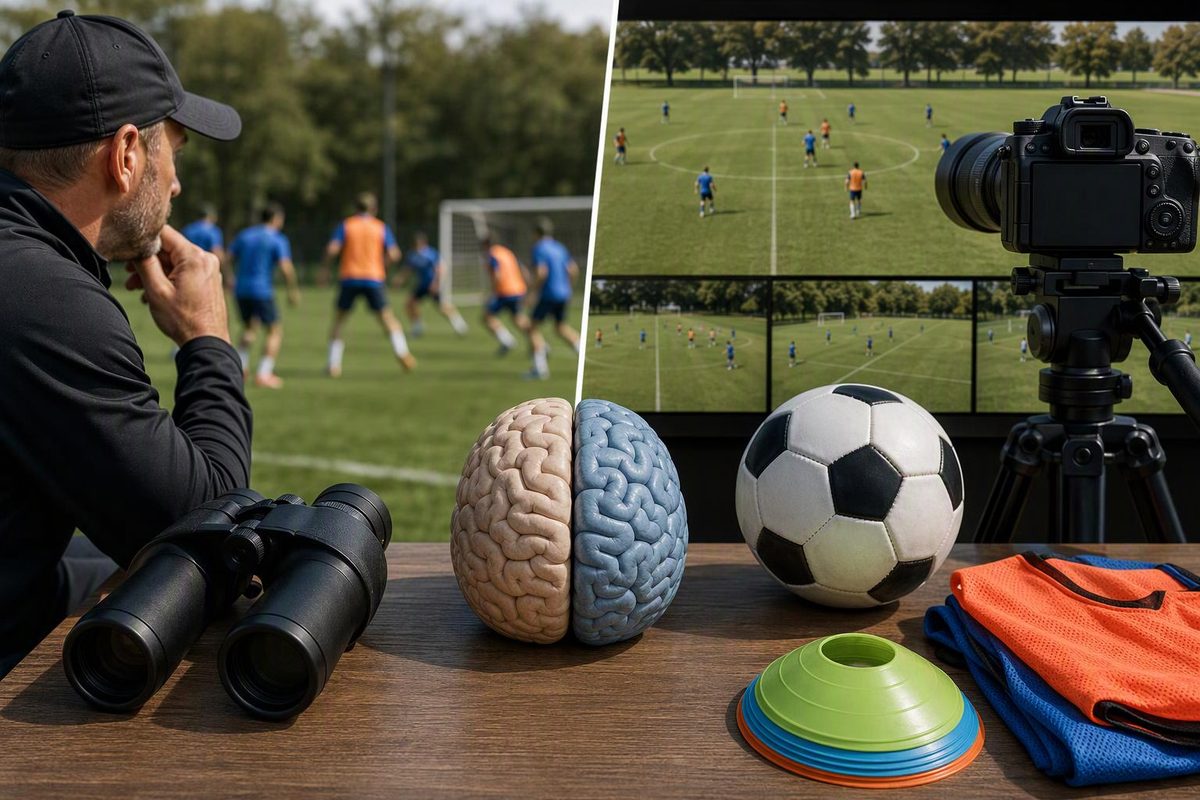
Compare live observation and video review by coaching question, camera coverage and the evidence each method can provide.
Start with what you need to see
Use live observation when you need to respond during an activity. Use video when the question requires replaying a visible sequence. Combine them when the live note tells you where to look and the recording contains the people or space you need to examine.
This is an editorial decision framework, not evidence that one method produces better players. FIFA’s 2022 tournament analysis combined expert observation, video and metrics; that demonstrates complementary methods at elite level, not a requirement for a grassroots team’s equipment budget. FIFA: World Cup 2022 analysis.
Compare the actual job
| Question | Better starting point | What to watch for |
|---|---|---|
| Did players understand the restart rule? | Live observation and a question | A recording of behaviour alone cannot supply their explanation. |
| Which support options were visible before a turnover? | Video with a sufficiently wide view | An off-camera player remains unknown. |
| Should I change this activity now? | Live observation | You still need an agreed reason to intervene. |
| Can another coach inspect the same sequence? | Video plus a timestamp | Both coaches must use the same event definition. |
Where live observation earns its place
An observer can choose a position, follow an off-ball player and ask a player what they noticed. Give that observer one job. Watching the far-side support player is different from following the ball and recording every technical error.
The tradeoff is reviewability. A note such as “support was late” needs a specific moment and a description of the movement. If you cannot recover those details, treat the note as a question for the next session rather than a settled finding.
Where video earns its place
Replay lets two people return to the same recorded event. Write down the timestamp and watch the lead-up, not just the final mistake. Keep the full sequence available alongside any short clip so your explanation can be challenged.
Check the image before committing to a full review. If the intended passing option is outside the frame, do not label the player as having ignored it. Video is a record of the camera’s view. It is not a record of everything on the pitch, or of what a player was thinking.
A small combined workflow
Before training, choose one question and agree what counts as an example. During the activity, note a few candidate moments. Afterwards, review only those sequences and one contrasting successful example. Ask the players about a moment where the evidence remains ambiguous.
Keep an “unobservable” category. If most relevant moments land there, change the observation position or camera setup before collecting more. Use authorised club recording and sharing arrangements. The useful upgrade may be a better view or clearer question, rather than another subscription.
If your question concerns support around the ball, the rondo guide identifies actions an observer can look for without treating the activity as proof of learning.